



Keynote Session: Humans in the Loop: Why Libraries Matter in the Age of AI
 A patron comes to your desk with an answer ChatGPT gave them at home. It’s confident, it’s detailed, and it’s wrong. What you do next is the whole point. AI tools now draft, summarize, and answer in seconds, and the headlines swing between miracle and menace. This talk offers a calm, clear-eyed look at where AI is taking society: the real gains for our communities, the real risks, and the hype in between. Libraries sit at the center of that story. You already hold the skills your patrons need most: curation, trust, and the judgment to tell signal from noise. The quiet worry in every library breakroom is whether you know enough. You do—and guiding your community through AI won’t require you to become a programmer. We’ll explore what AI changes, what it can’t, and the practical steps that keep librarians at the center of community life.
Keynote Speaker: Scott Tilley
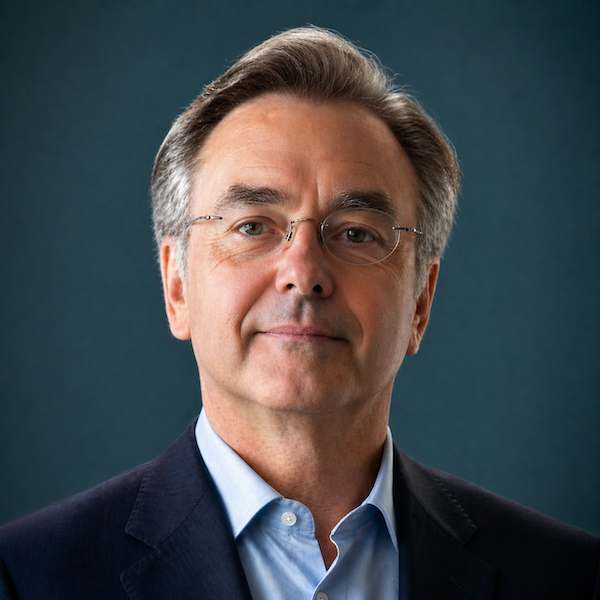 Scott Tilley is an emeritus professor at the Florida Institute of Technology, president of Big Data Florida, and founder of the Center for Technology & Society. His recent books include Death of a Professor (2026), The Silicon Heart (2025), and Systems Analysis & Design (2024). He writes the weekly “Spirituality Today” column for Florida Today. He holds a Ph.D. in computer science from the University of Victoria. Contact him at stilley@bigdataflorida.org or (321) 604-1294.
Agenda
9:30 - 9:45: Welcome
9:45 - 10:20: Annual Reports (NEFLIN Staff)
10:20 - 10:40: Break
10:40 - 11:40: Keynote with Scott Tilley (see description above)
11:40 - 12:00: NEFLIN Awards
12:00 - 1:00: Lunch
1:00 - 1:30: Concurrent Session #1
Location: Ballroom
Presentation: Your AI Literacy Starter Kit
Presenter: Scott Tilley
Description: AI can feel like a firehose. This hands-on session is a practical starter kit for library staff: no coding, no jargon, no prior experience required. We’ll tour the four free tools worth knowing (ChatGPT, Claude, Perplexity, and NotebookLM) and put them to work on real library tasks: readers’ advisory, program planning, and plain-language rewrites. By the end, participants will be able to choose the right AI tool for a given task, write a clear prompt using a simple Role–Task–Context–Format pattern, and catch a hallucination or a fake image before sharing it. Everyone leaves with a one-page cheat sheet and three things to try at their desk on Monday.
_____________
Location: Room 1073
Presentation: Building Communities and Relationships through Storytelling
Presenters: Joey Hall, Jessica Kelly, and Heather Webb (Marion County Public Library)
Description: Building Communities and Relationships Through Storytelling explores the power of storytelling as a tool for creating meaningful connections between public libraries and the communities they serve. Through engaging programs and initiatives, storytelling helps connect patrons to library services while fostering relationships with community organizations, cultural groups and other service providers. These partnerships strengthen community bonds, promote cultural understanding and help create a more connected and vibrant community. This presentation highlights the storytelling-based programs offered through our library system, the outreach opportunities that storytelling makes possible and the ways storytelling can be used to build stronger relationships both within the community and among library staff. Additionally, it demonstrates how storytelling can enhance teamwork and improve communication among employees across library branches and other departments within our organization.
_____________
Location: Room 1095
Presentation: The Library as Laboratory: Building Spaces for Digital Schoalrship and Innovation
Presenter: Katy Webb (Stetson University duPont-Ball Library)
Description: University libraries worldwide are setting aside special places in their libraries designated as labs, particularly at institutions wanting to build their portfolio for digital scholarship and research support. Many times, the library is a central location that is selected to build a lab because it is already the place where scholarly and primary source material is located, and an established meeting place for professors, researchers, and graduate students. Some are creating creative spaces, such as data visualization labs, digital humanities labs, makerspaces, media labs, and podcasting studios. Others are hiring a librarian or technical staff to consult with users. This talk will be an overview of some of these innovative spaces, as well as an introduction of services generally offered by libraries that build media and data literacy. The presenter will draw on research done for her upcoming book on the topic entitled, Development of Creative Spaces in Academic Libraries: A Decisionmaker’s Guide. Learning Outcomes: Attendees will be able to define different models of creative spaces and labs in libraries, giving specific examples of successful labs. Attendees will also be introduced to the Lab Engagement Pyramid, which describes seven models of engagement and development for labs.
_____________
Location: Room 1097
Presentation: Balancing Security with Expanding Operations, Construction Projects, and Events Utilizing Safety Plans
Presenter: Chet Price (Jacksonville Public Library)
Description: Maintaining a security operation amid a range of disruptions is no small task; cultural institutions like libraries, in particular, face a unique balancing act of preserving an open, welcoming environment while responding to challenges such as renovations, construction, public protest, threats, and individuals who may not use facilities as intended. Ensuring that security, best practices, and protocols are followed in these dynamic, high-traffic spaces requires not just diligence, but innovation and foresight. Topics include changing security officer roles, changing security officer personnel, upgrading equipment, security during events, and security during construction.
1:45 - 2:15: Concurrent Session #2
Location: Ballroom
Presentation: Post-AI Academic Libraries
Presenters: Jason Martin and Evans Library Staff (Florida Tech)
Description: This session explores Evans Library’s ongoing strategy for transitioning to a post-AI library. We will detail our foundational planning project and retreat, the key concepts that emerged, and the actionable steps we have taken to integrate these initiatives across reference, instruction, the iDesk, collections, systems, and programming. Rather than delivering a prescriptive mandate, we will share our institutional journey—what we did and what we are currently doing—to spark inspiration and practical ideas for attendees to adapt at their own libraries. Learning Objectives Outline a foundational process for guiding a library’s transition into a post-AI landscape. Recognize actionable steps for integrating post-AI concepts across core functional areas, including reference. Formulate practical, adaptable ideas to initiate a similar operational transition tailored to the specific needs and resources of their home institutions.
_____________
Location: Room 1073
Presentation: Books on Wheels: How the NEFLIN Book Bike Expanded Daytona State College Library Outreach
Presenters: Elizabeth Albus and A.J. Delgado (Daytona State College)
Description: Last year, Daytona State College shared the story of launching its NEFLIN‑funded Book Bike. After a full year of taking the Book Bike across campus and into the community, we’re back to discuss what we’ve learned. This session will highlight how the Book Bike has influenced campus engagement, supported library outreach, and shaped our services. Participants will leave with a clear sense of how a Book Bike could benefit their own library, along with practical tips, operational insights, and lessons learned from our first year on the road.
_____________
Location: Room 1095
Presentation: AI in a Public Library? Yes! Appropriate Ways Your Patrons Can Use AI
Presenter: Colleen Skinner (Jacksonville University College of Law)
Description: AI Basics: What Is AI?- Show the difference between Traditional and Generative AI • How can AI help them? Show how AI can plan trips, create meal plans from items in the pantry and refrigerator, help write letters and emails, act as a mental health counselor • AI for job seekers- AI can help create resumes and refine cover letters, create practice interview questions, and help narrow down a career path based on interests. • AI for business owners- AI can help write social media posts, give marketing ideas, write customer emails, and assist with business planning. • AI for students- AI can help create study schedules, brainstorm paper topics, and appropriate academic uses will be highlighted in this area. At the end, participants will know appropriate ways AI can help them in everyday life, business, and school.
_____________
Location: Room 1097
Presentation: Keeping ‘Em in Stitches: How Sewing Brought a Community Together
Presenters: Isabella Roberts, Jennifer Stephenson and Wendy Symonds (Putnam County Library System)
Description: What started as a small mobile Makerspace project from a NEFLIN Innovation grant has grown into a program that serves hundreds across the county. With classes, shows, and sew-in gatherings spanning the library system, sewing and quilting has brought in a kaleidoscope of patrons of all ages and backgrounds eager to learn. We will talk about our programs and offerings, our joys and triumphs, and our hard-learned lessons that have led to this series of programs that has kept us all in stitches.
2:30 - 3:00: Concurrent Session #3
Location: Ballroom
This session will include two presentations.
Presentation #1: Auto Suggest a Purchase (ASAP)
Presenter: Lynn Jacobson, Stephanie Miller, and Somalia Jamall (Jacksonville Public Library)
Description: Auto Suggest A Purchase (ASAP) aims to close the gap between patrons’ suggestions and getting materials into patrons’ hands. Using the Polaris API, ASAP helps manage suggestions and automatically places a hold once an item is purchased. The project improves the suggest-a-purchase experience by streamlining the work the collection development team already does through a dashboard to manage suggestions, automatic patron communications, and automatic patron holds. If a patron suggests a purchase and the Library acquires the material, that patron should be first in line for it.
Presentation #2: Library Lovers’ Month – “Where the Wild Flavors Are” Community Collaboration with Mayday Ice Cream
Presenter: Alex Barr, Hana Tucker, and Casey Wooster (St. Johns County Public Library System)
Description: St. Johns County Public Library System’s Marketing and Engagement team launched a creative, community-centered outreach initiative in partnership with Mayday Ice Cream to celebrate Library Lovers’ Month. Inspired by a successful campaign from the Anne Arundel County Public Library Foundation in Annapolis, Maryland, the team built on the idea and expanded it with custom, staff-designed literary ice cream flavors. The winning flavor, “Where the Wild Flavors Are,” became the centerpiece of a launch event that drew over 100 attendees. This campaign blended literature, local business collaboration, and sensory engagement to connect with users and non-users while also launching the library’s countywide non-user community survey.
_____________
Location: Room 1073
Presentation: Training that Sticks: Improving Onboarding for Staff
Presenter: Madeline Sims (Florida State College of Jacksonville)
Description: This program will examine the successes and failures of training new employees. The speaker will share their stories (both good and bad) as a trainer, discuss barriers to training, common mistakes to avoid, effective training strategies to implement, appropriate training timelines, and how to create a more effective training program for library staff. Program’s learning objectives. 1) Attendees will reflect on their own history of being the trainer and/or trainee and share what was effective and helpful and what was not beneficial when learning a new job or training a new employee. 2) Attendees will learn different strategies for how to effectively train new employees at all levels of the library. 3) Attendees will brainstorm on types of training plans, materials, or timelines they might use in their library to train new employees.
_____________
Location: Room 1095
This session will include two presentations.
Presentation #1: All Aboard Library Express: Expanding Access to Early Literacy
Presenters: Jessica Parsons and Julie Quaid (Marion County Public Library System)
Description: Library Express is an outreach program that brings early literacy experiences to at-risk preschool children in Marion County through partnerships with Head Start centers. Trained library volunteers deliver engaging story times using high-quality children’s literature, helping children build foundational literacy skills while modeling effective read-aloud techniques for childcare providers. This session will share strategies for recruiting and training volunteers, creating portable story time kits, developing community partnerships, and expanding library services to families with limited access to library resources.
Presentation #2: Cultivating Readers Expansion – Growing Readers Challenge and Raising Readers Challenge
Presenter: Mary Renee Galloway and Kate Sprague (Volusia County Public Library)
Description: Volusia County Public Library launched two new reading challenges last year—Growing Readers and Raising Readers—to extend our established early literacy pathway, Cultivating Readers, for families beyond our successful 1000 Books Before Kindergarten™ component. Designed for children in kindergarten through fifth grade, these two initiatives were thoughtfully developed to align with developmental stages and support grade-level reading proficiency. Growing Readers emphasizes foundational skill-building through high-frequency word recognition and staff-created multimedia resources, while Raising Readers supports the transition from ‘learning to read’ to ‘reading to learn’ through curated, high-interest nonfiction content. Together, these new components strengthen school readiness and sustain engagement in reading as children grow.
_____________
Location: Room 1097
Presentation: From Spreadsheets to Storytelling: Transforming Library Assessment with LibInsight
Presenter: Brittnee Fisher (St. Johns River State College)
Description: Many libraries collect extensive data but struggle to transform it into meaningful insights when reporting relies on spreadsheets and manual processes. This session shares our library’s ongoing transition from Microsoft Office-based tracking and reporting to Springshare’s LibInsight. Attendees will learn why we initiated the project, how we approached implementation, lessons learned, and our future goals for creating a more sustainable, data-informed assessment culture. Learning Objectives: Identify challenges associated with document-based assessment workflows. Describe key considerations when implementing LibInsight. Explore ways centralized analytics can support library decision-making and demonstrate value.
.