


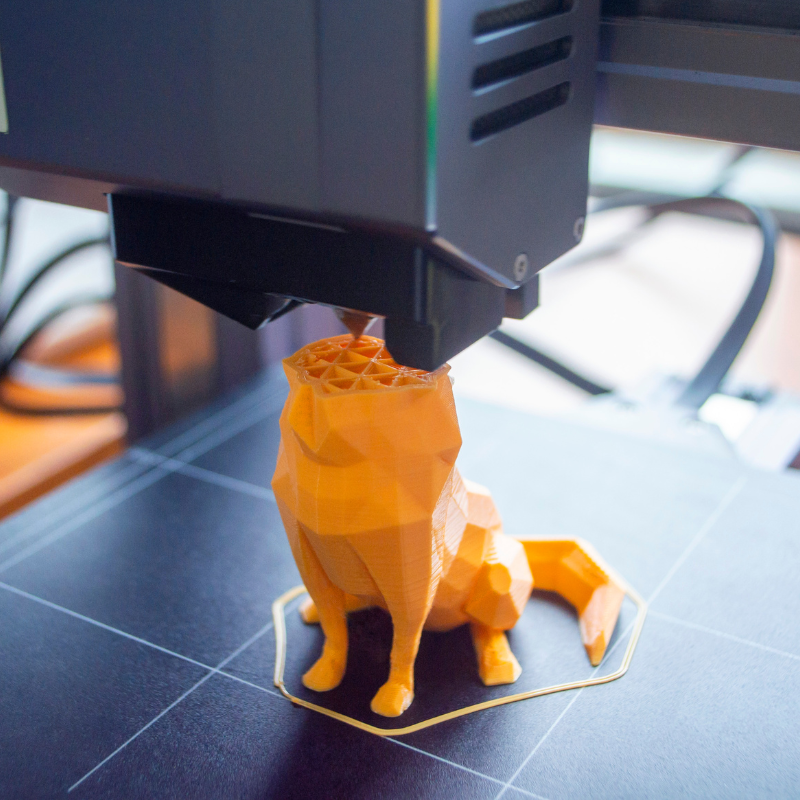
3D printing is a process in which a digital model is turned into a tangible, solid, three-dimensional object, usually by laying down many successive, thin layers of a material. 3D printing has become popular so quickly because it makes manufacturing accessible to more people than ever before. This is partly due to the price (the starting price for a basic 3D printer is about $300), but also the small size of the printers compared to traditional manufacturing.
First, a virtual design of the object is made. This design will work like a blueprint for the 3D printer to read. The virtual design is made using computer-aided design (CAD) software, a type of software that can create precise drawings and technical illustrations. A virtual design can also be made using a 3D scanner, which creates a copy of an existing object by basically taking pictures of it from different angles.
Once the virtual model is made, it must be prepared for printing. This is done by breaking down the model into many layers using a process called slicing. Slicing takes the model and slices it into hundreds or even thousands of thin, horizontal layers using special software.
After the model has been sliced, the slices are ready to be uploaded to the 3D printer. This is done using a USB cable or Wi-Fi connection to move the sliced model from the computer it’s on to the 3D printer. When the file is uploaded to the 3D printer, it reads every slice of the model and prints it layer by layer.
The 3D printer will begin printing the layers of material in a process known as material extrusion. Depending on the type of 3D printer and material being used, there are several methods of material extrusion.
Most commonly, the 3D printer will have a nozzle ejecting a semi-liquid material, like molten plastic, metal, or cement. The extrusion nozzle can move in both horizontal and vertical directions as it precisely places the material, following the blueprint of the digital model layer by layer.
This process is repeated until the 3D printer has replicated every layer in the digital model with the extruded material.

